Advanced 3D Mammography in Athens: Fast, Accredited, & Compassionate Care.
Prioritize your breast health with Northeast Georgia’s leading breast cancer specialists.
- No Referral Needed: Book your annual screening directly with our team.
- Easy Online Appointment Requests: Input your information and our team will be in touch.
- Care From The Best: Our team is made up of dedicated breast health specialists who are experts in the field
Schedule Your Appointment Now

Leading-Edge Technology:
Utilizing 3D Tomosynthesis for superior clarity.

Expert Clinical Team:
Led by Georgia’s top breast surgeons, in collaboration with our comprehensive oncology team and services.

Patient-Centered Comfort:
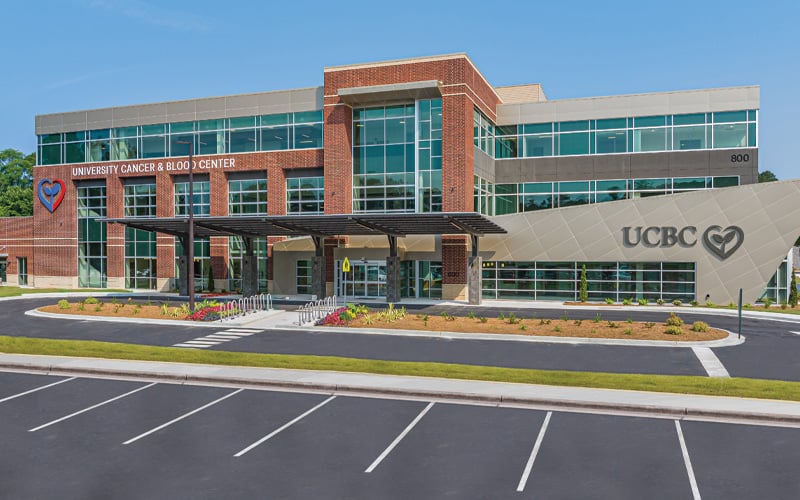
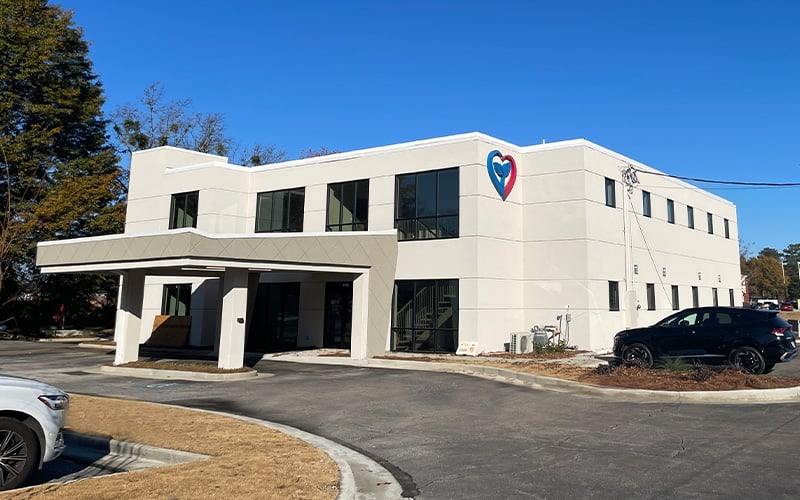
Enjoy a private, comfortable environment at our Comprehensive Breast Health Center with free, front-door parking.
Why 3D Mammography (Tomosynthesis) is the Gold Standard
UCBC utilizes 3D Tomosynthesis, which is clinically proven to be more effective than 2D mammography at detecting small lesions in dense breast tissue. Unlike traditional 2D digital mammography, which takes a single X-ray image from the front and the side, 3D technology captures multiple “views” of the breast from various angles.
How it Works: During the 3D portion of the exam, the X-ray arm sweeps in a slight arc over the breast, taking multiple images in seconds. A computer then reconstructs these images into a 3D volume. This allows our team to examine the tissue layer-by-layer, much like turning the pages of a book.
Key Clinical Benefits:
- Clarity for Dense Breasts: Women with dense breast tissue benefit most from 3D imaging, as it provides the clarity needed to distinguish between healthy tissue and potential abnormalities.
- Detection of Small Cancers: By eliminating “summation artifacts” (overlapping healthy tissue shadows), 3D mammography has been shown to increase the detection of invasive cancers by up to 40%.
- Reduced Callback Rates: One of the greatest sources of anxiety is being “called back” for more images. 3D imaging reduces these unnecessary callbacks by up to 40%.
Comprehensive Preparation & Your Visit
Knowing what to expect and how to prepare can significantly improve your experience. To ensure the clearest possible images at our Comprehensive Breast Health Center, please follow these guidelines:
- The “Day Of” Checklist: Please do not use deodorants, antiperspirants, talcum powders, lotions, or perfumes on the day of your exam. These products often contain metallic particles that can appear as white spots known as calcifications on the mammogram. The radiologist must carefully evaluate these calcium deposits to rule out abnormalities, and avoiding these products prevents unnecessary re-scans.
- Wardrobe Choice: Wear a two-piece outfit. You will only need to remove your top and bra, and we provide a soft, private wrap for your comfort.
- Comfort Tips: If your breasts are sensitive, try to schedule your appointment for the week after your menstrual cycle. Reducing caffeine intake 48 hours prior to the exam can also help reduce breast tenderness.
What Happens During the Appointment? The actual imaging process takes less than 15 minutes. A highly trained female technologist will guide you, positioning the breast on the platform and applying gentle compression for a few seconds per view. This compression is necessary to flatten the tissue slightly so that even the smallest abnormalities can be visualized.
Screening vs. Diagnostic Mammograms-What’s the Difference?
Understanding the distinction between these two exams is vital for both scheduling and insurance purposes.
- Screening Mammograms: These are routine annual exams for patients who have no current breast symptoms or noticeable changes. The primary goal is early detection. Under the Affordable Care Act, most insurance providers cover one screening mammogram every 12 months at 100% with no out-of-pocket cost.
- Diagnostic Mammograms: A diagnostic mammogram is used to investigate a specific area of concern. It is typically ordered if an abnormality was found during a screening or if you are experiencing symptoms like a lump, persistent pain, or skin changes. Because more specialized images are required, the radiologist often reviews these in real-time to determine if further tests, such as an ultrasound, are necessary. Please note that diagnostic exams may be subject to co-pays or deductibles depending on your
Being Called Back for a Diagnostic Mammogram
Being called back is common and does not mean you have cancer. It simply means we need a closer look at an area on your screening images. This can be due to normal tissue, dense breasts, or something that wasn’t clear the first time. Most follow-up results are normal. The goal is simply to be thorough and ensure your breast health is carefully evaluated.
Access, Insurance, & The “No Referral” Policy
Do I Need a Referral? For an annual screening mammogram, many insurance plans—including most private insurers and Medicare—do not require a referral from a primary care doctor if you are over the age of 40 and have no symptoms.
Insurance & The Affordable Care Act (ACA): Most plans cover annual screenings at 100% as a preventative service under Affordable Care Act (ACA) guidelines. We accept nearly all major insurance providers.
Financial Assistance: For those who are uninsured, UCBC offers competitive self-pay rates. Because our services are in-house in a clinical setting, we are able to provide high-quality specialized care at lower rates than a hospital setting. Questions about billing or coverage can be directed to our UCBC Patient Financial Services team.